

Tram laneUnited Kingdom
An introduction to the traffic rules and road signs of United Kingdom. Learn about driving, road safety and much more in our illustrated book, with answers to frequently asked questions.
For informational purposes only. Always follow official regulations. Some content and images were created with AI assistance.
 Traffic rules
 United Kingdom
65. Tram lane
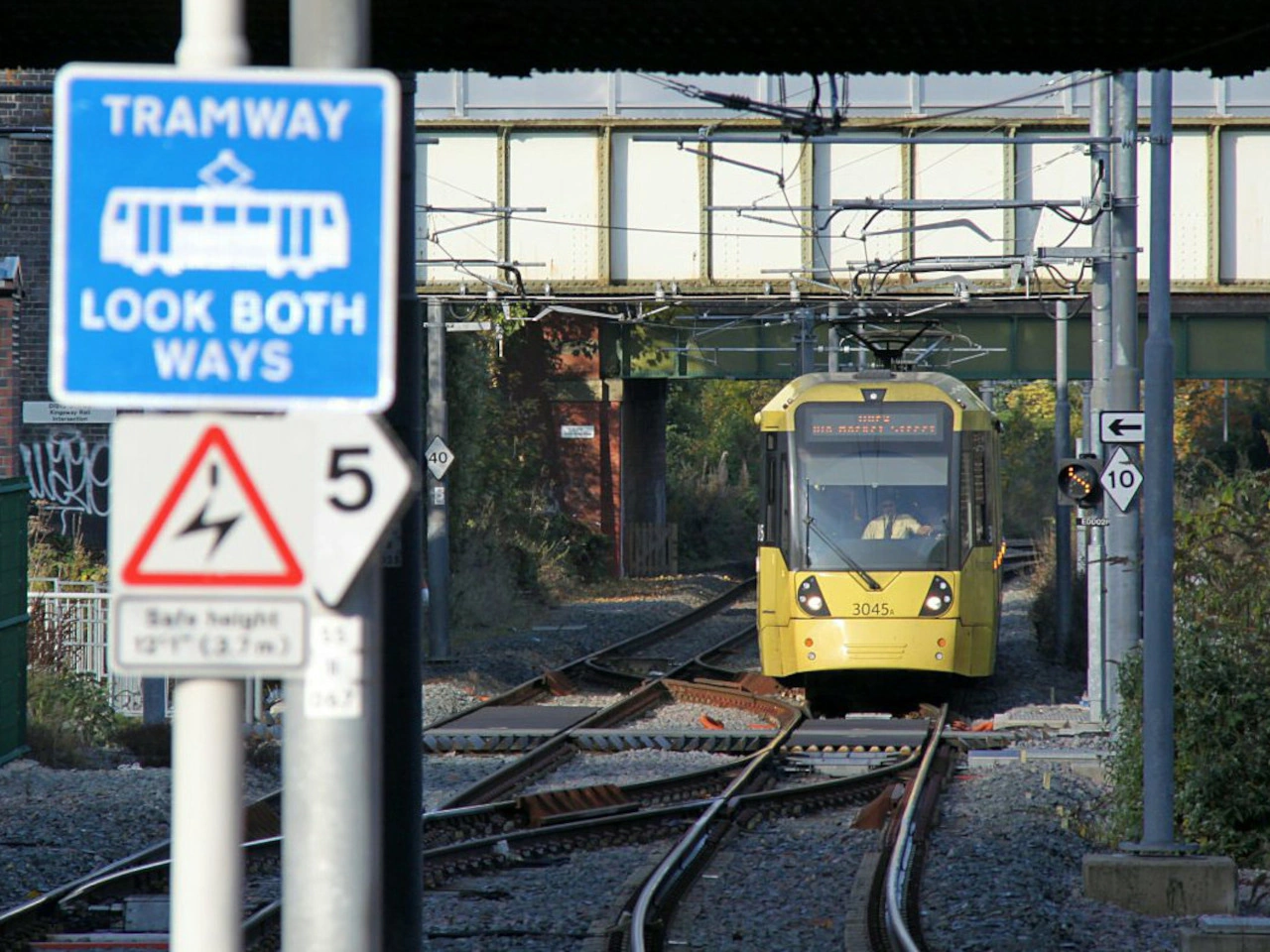
A tram lane is a part of the road or a separate track area intended primarily for trams. It may be physically separated from other traffic or form part of the roadway while remaining reserved for trams and, in some countries, certain other authorised vehicles.
Drivers should not enter or obstruct a tram lane unless the applicable signs, markings or traffic rules permit it. Because trams cannot steer around obstacles, particular care is required when crossing or driving near tram tracks.
Wikimedia.org • Alan Murray-Rust • CC BY-SA
May British motorists stop on tram tracks?
No, except in a designated bay clear of the tram path.
🔗 gov.uk • Highway Code for Great Britain — Rules300–307, tramways; tram signals and passenger stops
How can British drivers recognise tram swept paths?
Look for different colours, textures or boundary markings.
🔗 gov.uk • Highway Code for Great Britain — Rules300–307, tramways; tram signals and passenger stops
Why must British drivers keep tram swept paths clear?
Trams cannot steer around obstacles.
🔗 gov.uk • Highway Code for Great Britain — Rules300–307, tramways; tram signals and passenger stops
May British tram-route signs authorise other vehicles?
Yes, if the sign includes their bus, cycle or taxi permissions.
🔗 gov.uk • Highway Code for Great Britain — Rules300–307, tramways; tram signals and passenger stops


