

Climbing laneUnited Kingdom
 Traffic rules
 United Kingdom
42. Climbing lane
A climbing lane is an additional traffic lane provided on an uphill section of road for vehicles that travel significantly slower while climbing, particularly heavy or less powerful vehicles. It allows faster traffic to pass without having to move into a lane used by opposing traffic.
Drivers using a climbing lane should follow the signs and road markings that determine who may use the lane and merge back into the normal traffic lane safely when the climbing lane ends. The exact rules and permitted users vary between countries.
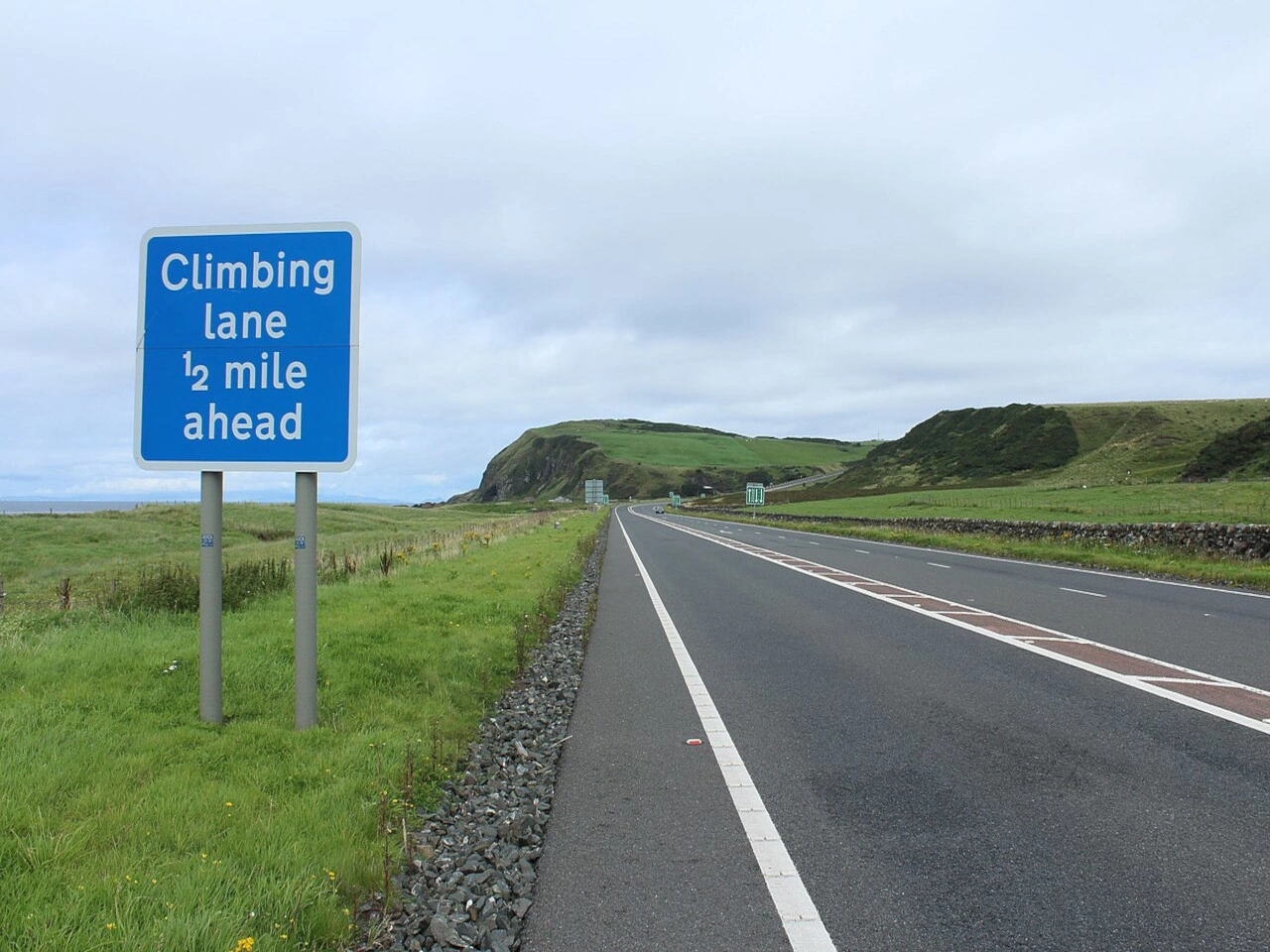
Wikimedia.org • Billy McCrorie • CC BY-SA
What is a climbing lane used for in the United Kingdom?
On steep UK roads, an additional climbing lane may accommodate slower vehicles while other traffic passes in a separate lane. Read the advance signs and lane markings, and do not assume the added lane continues beyond the hill.
🔗 gov.uk • Great Britain Highway Code: Rules 133–134,139: crawler/climbing lanes
🔗 gov.uk • DfT Know Your Traffic Signs: road markings (Great Britain)
What should you do when a climbing lane ends in the United Kingdom?
Look ahead for the lane-end sign and taper, check mirrors and blind spots, signal as required and merge only when there is a safe gap. Do not force traffic in the continuing lane to brake or swerve. Follow any locally prescribed merging priority.
🔗 gov.uk • Great Britain Highway Code: Rules 133–134,139: crawler/climbing lanes
🔗 gov.uk • DfT Know Your Traffic Signs: road markings (Great Britain)
Does a climbing lane create a higher speed limit or unrestricted overtaking in the United Kingdom?
No. An additional uphill lane does not by itself increase the legal maximum speed or cancel overtaking bans, lane-use restrictions or safe-distance duties. Follow the road signs, vehicle-specific limits and actual traffic conditions.
🔗 gov.uk • Great Britain Highway Code: Rules 133–134,139: crawler/climbing lanes
🔗 gov.uk • DfT Know Your Traffic Signs: road markings (Great Britain)


