

Disabled parkingUnited Kingdom
An introduction to the traffic rules and road signs of United Kingdom. Learn about driving, road safety and much more in our illustrated book, with answers to frequently asked questions.
For informational purposes only. Always follow official regulations. Some content and images were created with AI assistance.
 Traffic rules
 United Kingdom
51. Disabled parking
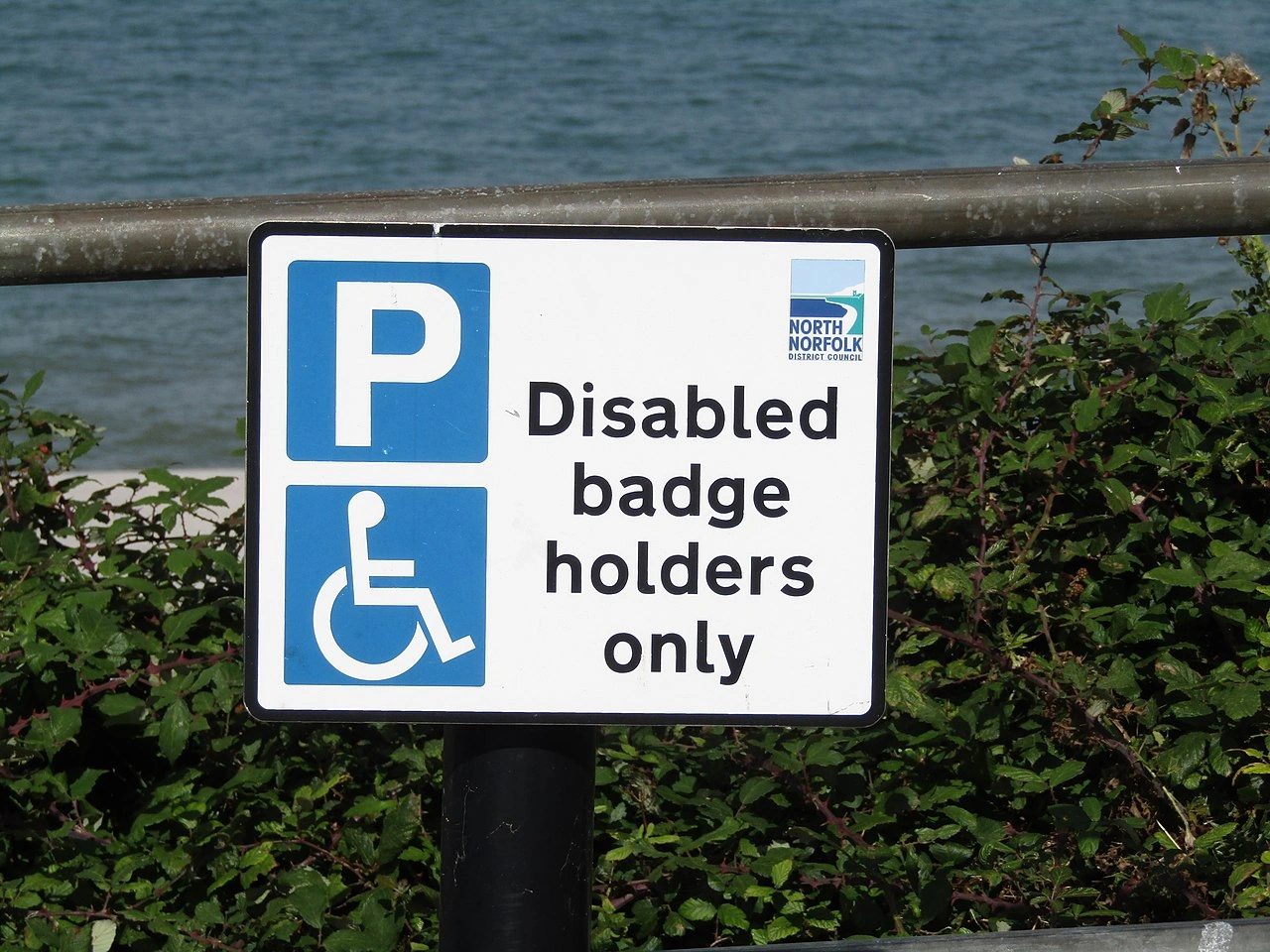
Disabled parking refers to parking spaces and parking privileges reserved for people with disabilities who meet the applicable eligibility requirements. Reserved spaces are normally identified by the international wheelchair symbol and are positioned to provide easier access to nearby facilities.
Use of a disabled parking space generally requires a valid disabled parking permit or card. The permit normally belongs to the eligible person rather than to a particular vehicle and may only be used when that person is driving or travelling in the vehicle.
Wikimedia.org • Kolforn • CC BY-SA
Does a UK Blue Badge allow parking on yellow lines in England?
In England, a correctly displayed Blue Badge and arrival clock normally allow up to three hours on single or double yellow lines, subject to loading bans and local schemes, including parts of central London. The guidance also requires a one-hour gap before parking the same vehicle again in the same road or part of it that day.
🔗 gov.uk • England, Blue Badge scheme: rights and responsibilities
Is parking free in every UK car park for Blue Badge holders?
No. In England, Blue Badge holders have concessions in qualifying on-street spaces and at parking meters, but off-street car-park operators set their own charging conditions. Read the car-park signs; a Blue Badge does not authorise parking in a clearway or another prohibited location.
🔗 gov.uk • UK Government, Blue Badge rights and responsibilities in England
May a relative use your Blue Badge to run errands without you in England?
No. It cannot be lent for someone else’s errands. Use when collecting or dropping off the badge holder must meet the scheme’s conditions.


