

One-way trafficUnited Kingdom
 Traffic rules
 United Kingdom
9. One-way traffic
One-way traffic means that vehicles on a road or carriageway may travel only in one designated direction. The permitted direction is normally indicated by traffic signs, lane arrows or road markings.
Some road users, such as cyclists or public-transport vehicles, may be allowed to travel in the opposite direction when signs expressly permit it. A one-way road does not by itself determine the speed limit, priority or parking rules.
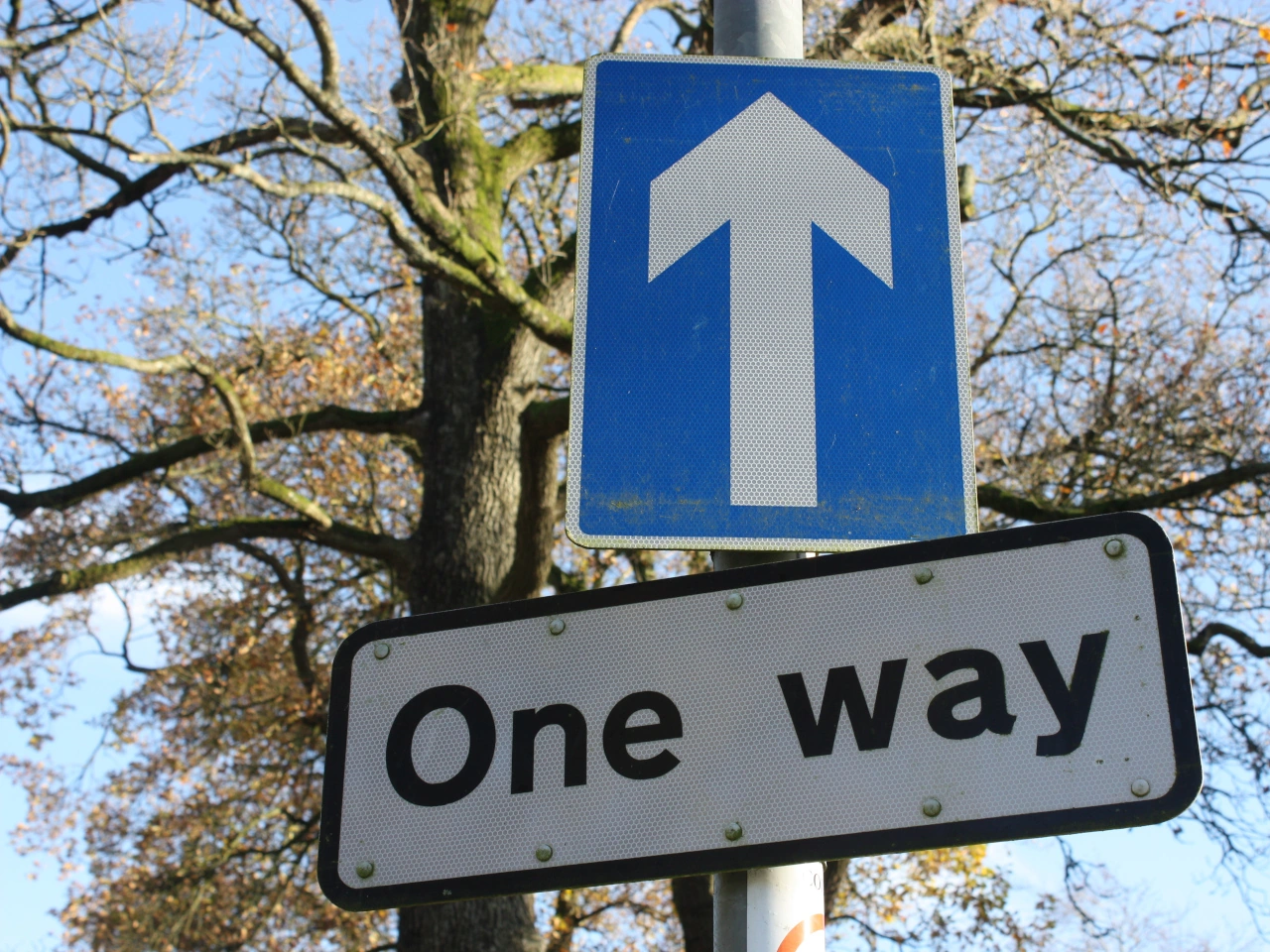
Wikimedia.org • Ardfern • CC BY-SA
How should I read a one-way restriction in the United Kingdom?
In Great Britain, follow one-way signs, no-entry signs and lane arrows. The Highway Code distinguishes the road’s traffic direction from a separate contraflow facility. Northern Ireland has its own Highway Code.
🔗 gov.uk • Great Britain Highway Code: Rules 109,143; cyclist Rule 69 and counterflow facilities
🔗 gov.uk • DfT Know Your Traffic Signs: regulatory signs (Great Britain)
May cyclists travel against the general traffic direction in the United Kingdom?
The Highway Code requires cyclists to obey one-way restrictions unless signs indicate an exemption or a designated contraflow cycle arrangement applies. Drivers must look for authorised oncoming cycle or bus movements instead of assuming every lane serves their direction.
🔗 gov.uk • Great Britain Highway Code: Rules 109,143; cyclist Rule 69 and counterflow facilities
🔗 gov.uk • DfT Know Your Traffic Signs: regulatory signs (Great Britain)
Does one-way traffic give me priority or a different speed limit in the United Kingdom?
A one-way restriction concerns direction. Continue to follow the applicable speed limit, signals, give-way or stop controls and junction-priority rules. Where authorised counterflow traffic exists, check for it before turning or crossing; your permitted direction is not automatic junction priority.
🔗 gov.uk • Great Britain Highway Code: Rules 109,143; cyclist Rule 69 and counterflow facilities
🔗 gov.uk • DfT Know Your Traffic Signs: regulatory signs (Great Britain)


