

Left-hand trafficUnited Kingdom
An introduction to the traffic rules and road signs of United Kingdom. Learn about driving, road safety and much more in our illustrated book, with answers to frequently asked questions.
For informational purposes only. Always follow official regulations. Some content and images were created with AI assistance.
 Traffic rules
 United Kingdom
44. Left-hand traffic
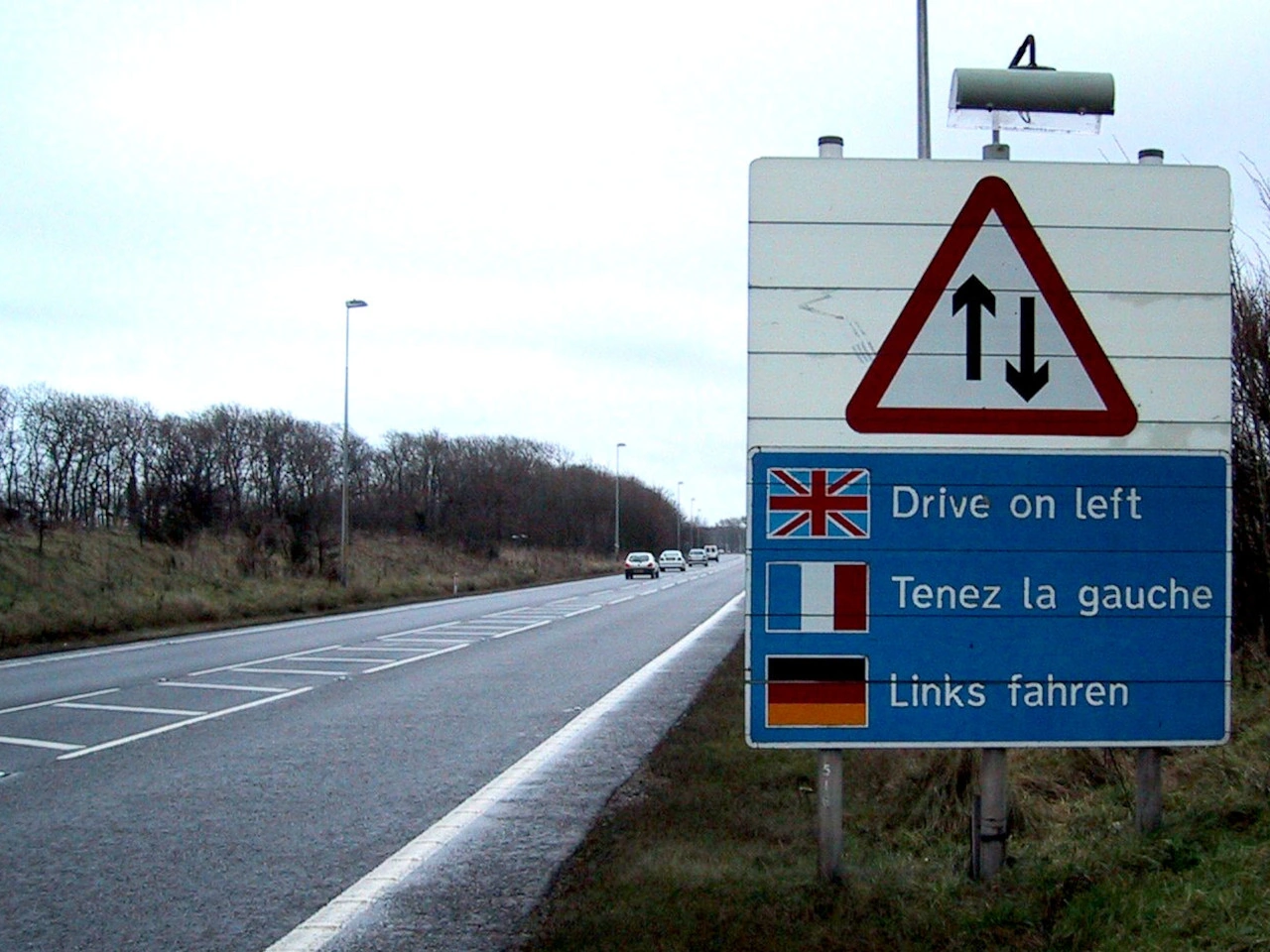
Left-hand traffic is a traffic system in which vehicles normally travel on the left side of the road. In countries using left-hand traffic, vehicles usually overtake on the right and most cars have the steering wheel on the right-hand side.
Drivers who are unfamiliar with left-hand traffic should pay particular attention at intersections, roundabouts, when turning and when entering or leaving roads, because familiar traffic movements are reversed compared with right-hand traffic.
Wikimedia.org • NFH • CC0
Does traffic normally drive on the left in the United Kingdom?
Yes. Traffic in the United Kingdom normally keeps to the left on two-way roads. Drivers should take special care when arriving from a country that normally keeps right.
🔗 gov.uk • Great Britain Highway Code: Rules 160,163,184–190; Rule 124 mph limits
On which side is overtaking normally carried out in the United Kingdom?
With ordinary left-hand traffic, overtaking is normally on the right. Exceptions can exist under local law, such as particular lane, turning or traffic conditions. Follow the local rules and never assume an unsafe pass is permitted.
🔗 gov.uk • Great Britain Highway Code: Rules 160,163,184–190; Rule 124 mph limits
What should visitors check when adapting to the driving side in the United Kingdom?
Keep left, use UK mph speed signs, and pay particular attention to roundabouts and junctions when arriving from a right-hand-traffic country. A right-hand-drive vehicle is common, but a steering-wheel position is not itself the driving-side rule.
🔗 gov.uk • Great Britain Highway Code: Rules 160,163,184–190; Rule 124 mph limits


