
Limitation de hauteurBelgique
36. Limitation de hauteur
Une limitation de hauteur interdit l’accès ou le passage aux véhicules dont la hauteur totale dépasse la valeur indiquée sur une section de route, un pont, un tunnel, un portail ou un autre ouvrage. La hauteur du véhicule comprend son chargement et tout équipement fixé au-dessus.
Les conducteurs de véhicules hauts doivent connaître leur hauteur exacte, tenir compte des avertissements en amont et emprunter un autre itinéraire si nécessaire. Ils ne doivent jamais se fier uniquement à leur appréciation visuelle ni tenter de passer sous un ouvrage lorsque la hauteur libre disponible est incertaine.
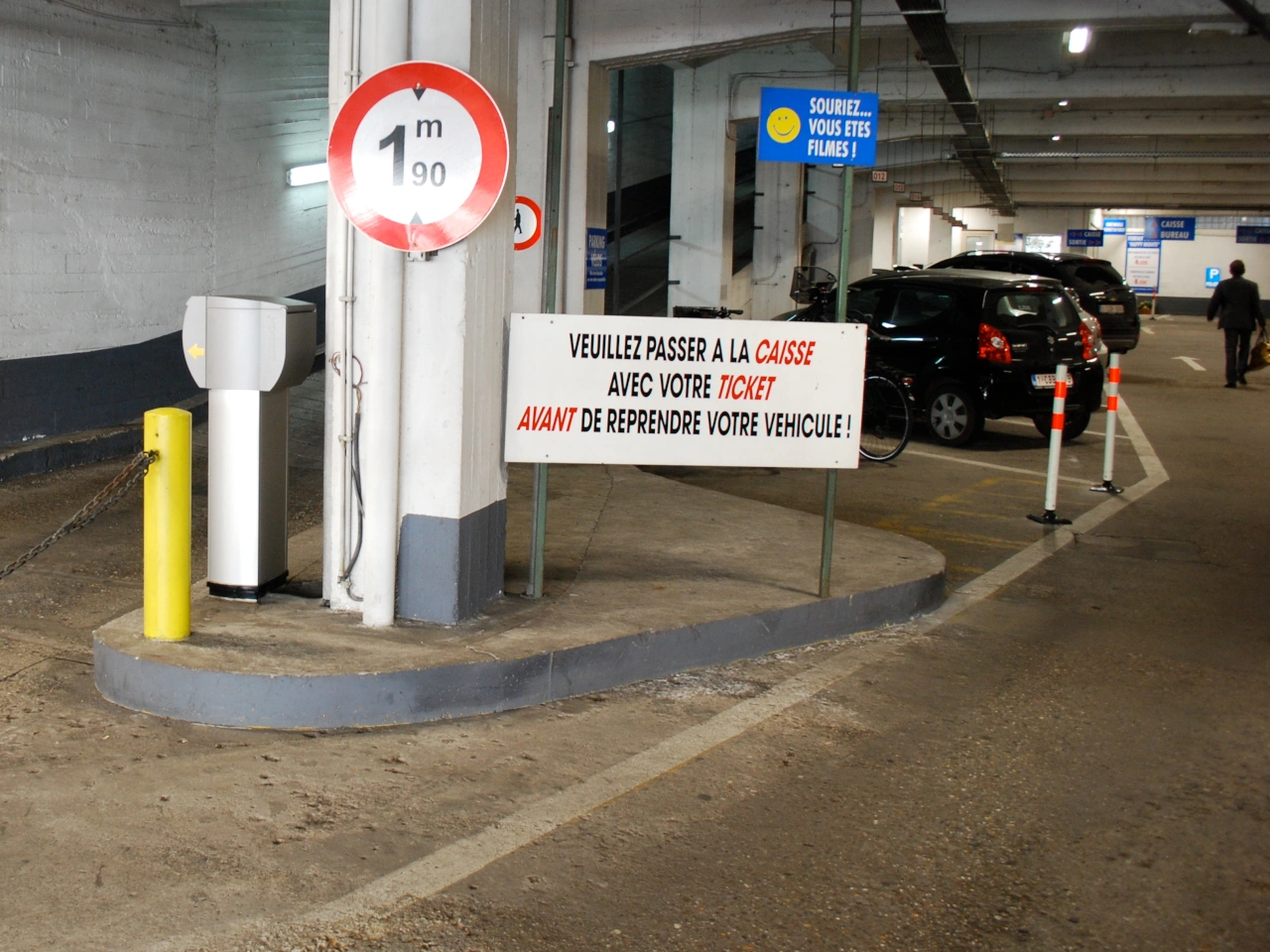
Which Belgian sign indicates a height limit?
Traffic sign C29 prohibits access for vehicles whose height, including their load, exceeds the height displayed on the sign.
Véhicules de plus de la hauteur indiquée interdits.
Signal routier C29 • Accès interdit aux conducteurs de véhicules ayant, chargement compris, une hauteur supérieure à celle indiquée.
Verkeersbord C29 • Verboden toegang voor bestuurders van voertuigen waarvan de hoogte, lading inbegrepen, groter is dan de aangeduide.
How can you recognise Belgian sign C29?
C29 is a circular prohibition sign showing the maximum permitted height between two vertical arrowheads.
Does C29 include the vehicle’s load?
Yes. The complete height of the vehicle and its load must be considered.
Do roof-mounted objects count?
Yes. Roof boxes, bicycles, machinery and other equipment form part of the vehicle’s total travelling height.
May a vehicle higher than the C29 value continue?
No. It must take another route and may not pass the sign.
May a vehicle exactly as high as the displayed value pass?
C29 prohibits vehicles whose height is greater than the displayed value. In practice, a driver should not attempt passage without sufficient additional clearance because the measured vehicle height and available space can vary.
Does C29 display the structure’s exact clearance?
No. The displayed value includes a safety deduction from the measured free clearance.
How is the displayed Belgian height calculated?
For a passage with a free clearance of at least 2.50 metres, the displayed limit is normally the measured clearance minus 0.30 metres.
How is the value calculated below 2.50 metres?
When the free clearance is below 2.50 metres, the displayed limit is normally the measured clearance minus 0.15 metres.
Which Belgian passages must be marked with C29?
Under the current placement rules, passages with a free clearance below 4.30 metres must be indicated by C29.
What if the clearance varies across the passage?
The sign must display the lowest available clearance.
What if different lanes have different clearances?
The lowest clearance for each lane must be indicated using lane-specific signs, including the applicable F89 or F91 lane arrangement.
Must C29 be placed where another route is still available?
Yes. Belgian placement rules require the restriction to be indicated at a location where affected drivers can still choose an alternative route.
What if no alternative remains at the actual restriction?
A similar advance sign with a supplementary distance panel must be installed earlier at a point where the driver can still choose another route.
Does C29 apply only to trucks?
No. It applies to every vehicle that exceeds the displayed height, including buses, motorhomes, vans, cars with high roof loads and other vehicles.
What is the normal maximum vehicle height in Belgium?
The general maximum height of a loaded vehicle is 4 metres.
Are there exceptions to the Belgian four-metre rule?
In Flanders and Wallonia, a loaded vehicle carrying compressed flax bales may reach 4.30 metres. This exception does not remove the obligation to respect a lower C29 restriction.
What is the maximum height of a non-motorised bicycle with its load?
Under the current Belgian Highway Code, the maximum height is 2.50 metres.
Which rule applies when C29 is lower than the general vehicle limit?
The lower C29 value must be respected. A vehicle may comply with the general four-metre limit and still be too high for a particular passage.
Does C29 impose a speed limit?
No. The applicable regional, zonal, posted and vehicle-specific speed limits remain in force.
Does C29 change priority?
No. Drivers must continue to obey traffic lights, priority signs and the ordinary priority rules.
Can C29 apply to only one lane?
Yes. When the sign is placed above a particular lane or incorporated into lane-control signage, it applies to that lane.
May you change lanes to use a higher part of the passage?
Only when the signs and markings authorise it and the lane change can be completed safely. Never ignore a lane-specific restriction.
Should a truck driver rely on the height stated in vehicle documents?
Not exclusively. The actual travelling height may change with the load, suspension and attached equipment. The driver should know the vehicle’s current maximum height.
What should you do after reaching C29 with an oversized vehicle?
Do not pass the sign. Stop where safe and follow the indicated diversion. Contact the police or road authority when turning or reversing cannot be done safely.
May you reverse away from the restriction?
Reversing is a manoeuvre, so the driver must give way to every other road user. Use assistance where necessary, particularly with a long or high vehicle.
What should you do after striking a Belgian bridge or tunnel?
Stop safely, activate the hazard warning lights and call the emergency services on 112. Do not continue until the vehicle, load and structure have been assessed.
Do priority vehicles have to respect C29?
Yes. Belgium’s new Code of the Public Road expressly retains C29 among the restrictions that priority vehicles may not disregard merely because they are carrying out a priority assignment.
What changes on 1 June 2027?
The new Belgian Code of the Public Road retains traffic sign C29 and expressly applies it to vehicles or vehicle combinations whose height, including the load, exceeds the displayed value.

Règles de circulation
Belgique