
Traversée d’animauxBelgique

Apprenez les règles de circulation avec des explications claires et des exemples visuels dans notre livre illustré, simple et agréable à étudier.


30. Traversée d’animaux

Un avertissement de traversée d’animaux indique un endroit ou une section où des animaux sauvages, du bétail ou des animaux montés peuvent pénétrer sur la route ou la traverser. Les animaux peuvent apparaître soudainement, se déplacer de manière imprévisible ou être difficiles à voir dans l’obscurité, la végétation ou par mauvais temps.

Les conducteurs doivent réduire leur vitesse, surveiller les deux côtés de la route et rester prêts à s’arrêter. Le panneau d’avertissement ne donne pas à lui seul la priorité aux animaux et n’impose pas une limitation numérique, mais les conducteurs doivent éviter de les effrayer, de les mettre en danger ou de les heurter.
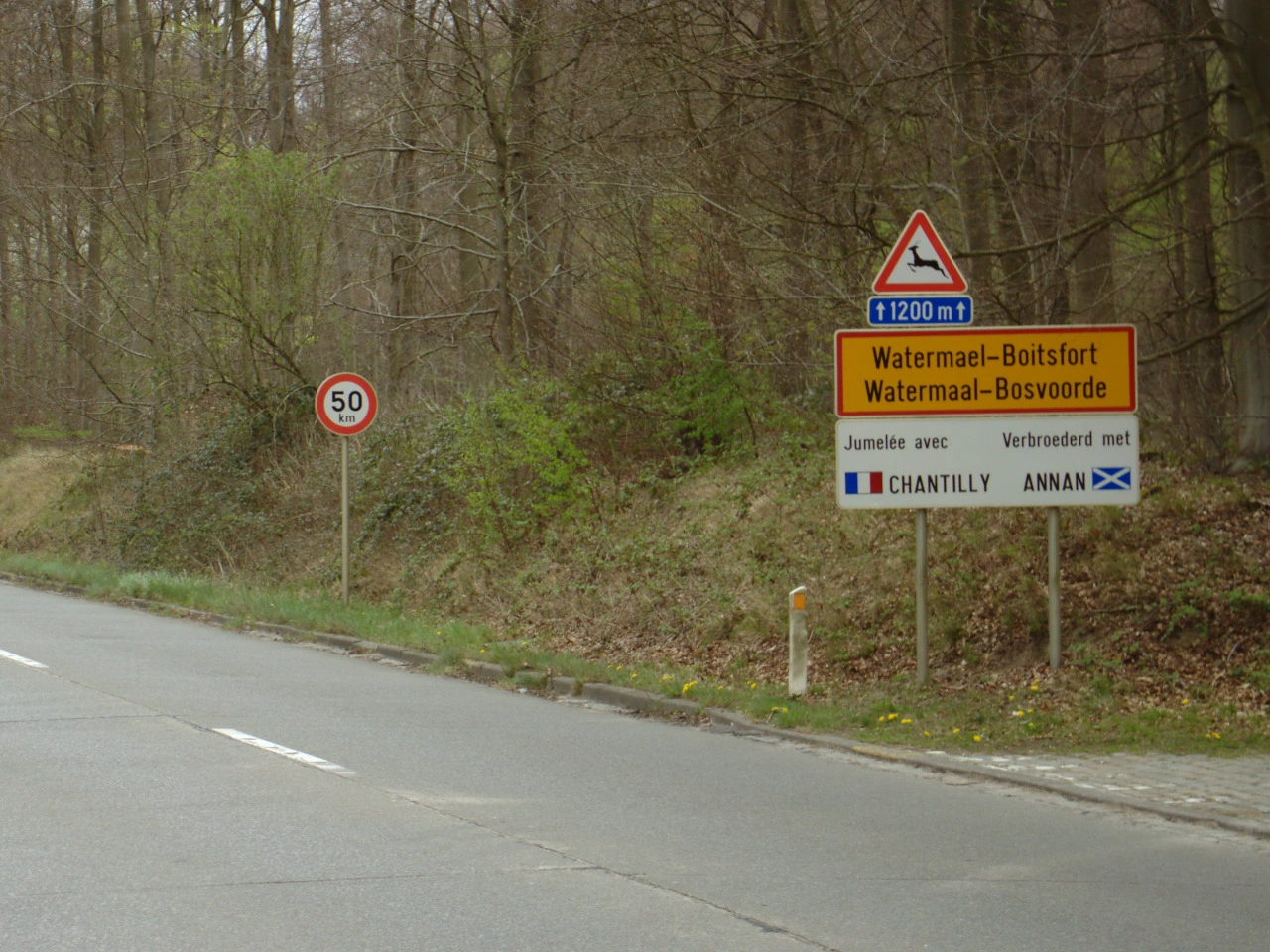
Traversée d’animaux
Which Belgian signs warn of animals crossing?

Under the current Belgian Highway Code, traffic sign A27 warns of large wild animals and traffic sign A29 warns of livestock crossing.

Avertissement pour bétail sur la route. Avertissement pour bétail sur la route.

Signal routier A29 • Traversée de bétail.

Verkeersbord A29 • Doortocht van vee.

Avertissement pour traversée de cerfs. Avertissement pour traversée de cerfs.

Signal routier A27 • Traversée de gros gibier.

Verkeersbord A27 • Doortocht van groot wild.

What does Belgian sign A27 mean?

Traffic sign A27 warns of a road section where large wild animals may cross.

Which animals does A27 commonly concern?

Belgian placement rules specifically refer to road sections regularly crossed by animals such as deer, roe deer and wild boar.

What does Belgian sign A29 mean?

Traffic sign A29 warns that livestock may cross or travel on the road.

Which animals may be considered livestock?

The sign may warn of controlled farm animals such as cattle, sheep, goats or other livestock being moved across or along the public road.

Does A27 or A29 impose a speed limit?

No. They are warning signs. The applicable regional, zonal, posted and vehicle-specific speed limits remain in force.

Must you drive below the speed limit?

Yes, when necessary. Belgian drivers must adapt their speed to visibility, traffic, road conditions and foreseeable hazards and remain able to stop before an obstruction.

Must you slow down when approaching livestock or horses?

Yes. A driver must slow down when approaching draft, load or riding animals or livestock on the public road.

When must you stop near controlled animals?

You must stop when the animals show signs of fear.

Does the same specific stopping rule apply to wild animals?

The express rule concerning frightened animals applies to draft, load and riding animals and livestock. A driver encountering wild animals must still reduce speed or stop whenever necessary to avoid danger.

Do animals have legal priority because A27 or A29 is displayed?

No. The signs warn of danger but do not create a separate priority rule. Drivers must nevertheless avoid striking, frightening or trapping animals already on the road.

Is the person leading livestock considered a driver?

Yes. A person riding, leading or supervising draft, load or riding animals or livestock is considered a driver under Belgian traffic law.

Must animals on the road be supervised?

Yes. Moving animals and livestock must have a driver, whether they travel individually or in a herd.

Must handlers remain near their animals?

Yes. Drivers and assistants must remain close enough to control the animals and prevent them from obstructing traffic or causing an accident.

Can additional handlers be required?

Yes. The person controlling draft, load or riding animals or livestock must be assisted by enough handlers when this is necessary for traffic safety.

May animals use the carriageway?

Animals being ridden, led or supervised generally follow the applicable rules for drivers. Outside built-up areas, certain animals or livestock may use the right-hand level verge when this does not endanger other road users.

May ridden or harnessed animals gallop inside a built-up area?

No. Under the current Belgian Highway Code, harnessed or ridden animals may not be allowed to gallop inside built-up areas.

Should you sound the horn near animals?

Avoid unnecessary horn use because it may frighten them. In a built-up area, the horn may generally be used only to provide a necessary warning to prevent an immediate accident.

How should you pass a horse in Belgium?

Reduce speed considerably, leave as much lateral space as reasonably possible and pass quietly. Stop if the horse shows signs of fear.

How should you approach a herd crossing the road?

Slow down early, stop when necessary and follow the handler’s directions. Do not attempt to drive through the herd or separate the animals.

May you overtake animals on the road?

Only when the manoeuvre can be completed safely, quietly and with sufficient space. The A27 or A29 sign itself does not create a specific overtaking prohibition.

May you stop or park near an animal-crossing sign?

The signs do not create an automatic stopping or parking prohibition. A vehicle may still not be stopped or parked where it creates danger, reduces visibility or obstructs animals and their handlers.

What should you do if a wild animal is standing on the road?

Reduce speed smoothly, stop at a safe distance and allow it to leave. Expect another animal to follow and avoid approaching or trying to move it yourself.

What should you do after colliding with an animal?

Stop safely, activate the hazard warning lights, protect the scene and check whether anyone is injured. Contact the police or emergency services when the animal, vehicle or debris creates danger.

Should you approach a wounded wild animal?

No. Keep your distance because an injured animal may react defensively. Let the police, a wildlife rescue centre or another competent service handle it.

What if the injured animal runs away?

Do not follow it into woodland or fields. Record the location and direction in which it travelled and provide that information to the police or wildlife professionals.

Does the absence of A27 or A29 mean animals will not cross?

No. Animals can appear on any road. Drivers must remain attentive and adapt their speed even where no warning sign is installed.

What changes on 1 June 2027?

Belgium’s new Code of the Public Road uses a single traffic sign A27 for animals crossing. The animal symbol displayed on the sign identifies the species concerned.

What happens to the separate livestock sign?

Under the new sign system, the adaptable A27 animal sign replaces the current distinction between A27 for large wild animals and A29 for livestock. Existing signs remain recognised during the applicable transitional period.

1 Belgique 2 Autoroute 3 Voie rapide 4 Zone résidentielle 5 Agglomération 6 Zone 7 Limitation de vitesse 8 Piste cyclable 9 Rue cyclable 10 Zone piétonne 11 Ralentisseur 12 Douane 13 Circulation à sens unique 14 Quai 15 Pente 16 Voie de bus 17 Impasse 18 Panneau Stop 19 Cédez le passage 20 Rond-point 21 Route prioritaire 22 Rétrécissement de chaussée 23 Priorité sur la circulation venant en sens inverse 24 Cédez le passage à la circulation venant en sens inverse 25 Passage pour piétons 26 Passage à niveau 27 Direction obligatoire 28 Interdiction de tourner 29 Zone scolaire 30 Traversée d’animaux 31 Chutes de pierres 32 Virage 33 Chevron 34 Circulation à contresens 35 Travaux routiers 36 Limitation de hauteur 37 Limitation de largeur 38 Limitation de poids 39 Panneau de contrôle radar 40 Barrières sélectives 41 Panneau directionnel de carrefour 42 Priorité au prochain carrefour 43 Feux de circulation 44 Feux pour piétons 45 Permis de conduire 46 Repère de localisation 47 Miroir routier 48 Frontière internationale 49 Itinéraire cyclable 50 Stationnement 51 Stationnement interdit 52 Dépose-minute 53 Parcmètre 54 Gestion du trafic 55 Marche arrière 56 Carrefour non réglementé 57 État de la chaussée 58 Rocade 59 Autoroute cyclable 60 Plaque d’immatriculation 61 Station de recharge 62 Dangers 63 Tourner au feu rouge 64 Carte d’identité 65 Risque d’incendie 66 Piéton 67 Cyclomoteur 68 Voiture 69 Camion 70 Autobus 71 Police 72 Ambulance 73 Feux de tram 74 Norme européenne d’émissions 75 Nid-de-poule 76 Place 77 Chemin 78 Particules 79 Pollution de l’air 80 Heure de pointe 81 Code de la route 82 Caniveau 83 Vélo cargo 84 Véhicule forestier 85 Véhicule de chantier 86 Ensemble semi-remorque 87 Trolleybus 88 Speed pedelec 89 Véhicule de livraison 90 Moteur au ralenti 91 Dépanneuse 92 Quatre roues motrices 93 Accès interdit à tous les véhicules 94 Vélo 95 Équipement de moto 96 Autorail 97 Voie ferrée 98 Transports publics 99 Caravane 100 Remorque ...